The Impact of Large Beer Excise Tax Increases on Traffic Fatalities
Abstract
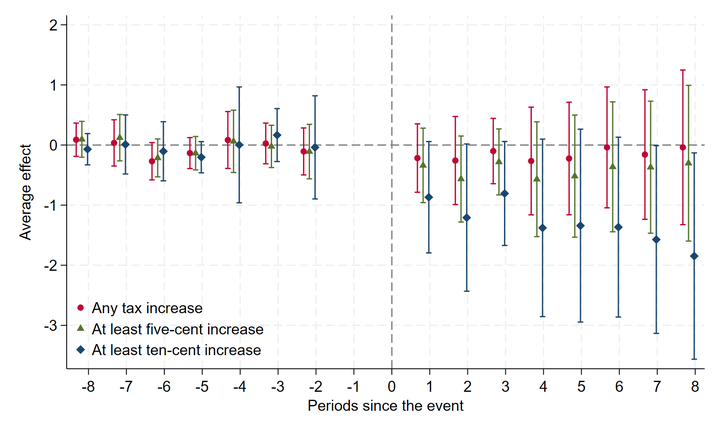
While economic theory suggests alcohol taxes should decrease alcohol-related harms unless alcohol consumption is perfectly inelastic, findings from the empirical literature have been mixed. Consequently, the alcohol tax policy landscape has remained unchanged over recent decades, resulting in a drop in real beer taxes. This paper reexamines the effect of beer excise taxes on alcohol-impaired traffic fatalities in the United States using updated data and a two-stage difference-in-difference design, with a particular focus on the magnitude of tax increases. Event-study estimates indicate that larger beer excise tax increases are associated with larger and more precisely estimated post-treatment declines in alcohol-impaired traffic fatalities, while effects of smaller increases are negative but imprecisely estimated. These patterns are consistent across age groups and times of day and are robust to alternative model specifications. Overall, the findings suggest that the effectiveness of beer taxation in reducing alcohol-impaired traffic fatalities depends on policy magnitude.

Ana Paula Milan Hinostroza
PhD candidate in Economics
I am a doctoral candidate in Economics at the University of New Mexico. My research lies at the intersection of health and public economics, with a focus on programs and interventions aimed at mitigating the negative externalities of risky health behaviors. My current work examines how public policies, particularly alcohol taxation, influence risky health behaviors and related societal outcomes, including crime.